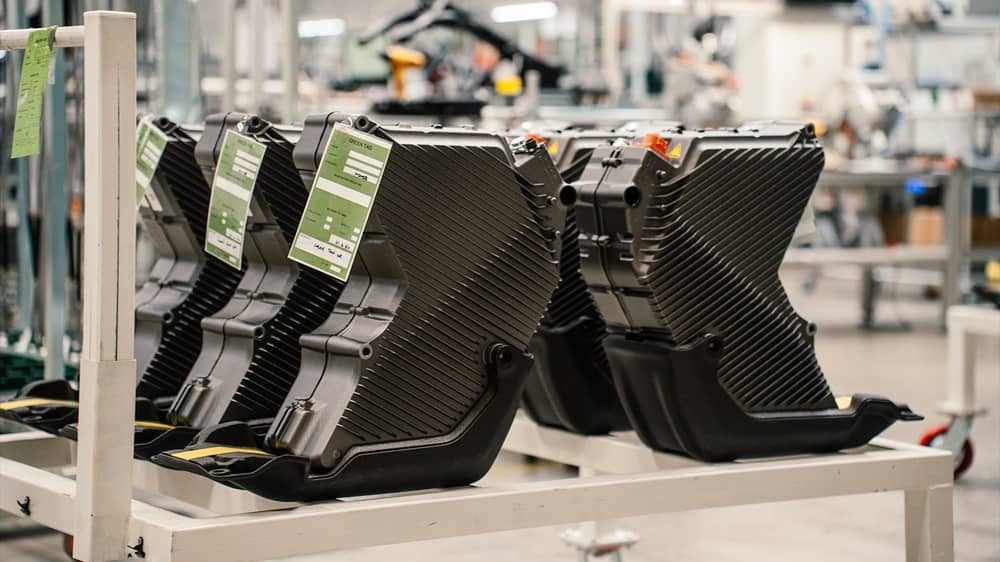
If your Stark VARG battery is not charging, the problem can come from several different parts of the charging system. A charger fault, damaged charging cable, incorrect battery temperature, battery-management-system (BMS) protection, charging-port damage, low or abnormal battery voltage, or a battery that has reached the end of its service life can all prevent normal charging.
Because the Stark VARG uses a high-voltage lithium-ion battery system, it is important to troubleshoot charging problems carefully. Do not open the battery pack or attempt to repair its internal cells, BMS, or high-voltage components unless you are qualified to work on high-voltage lithium-ion systems.
The good news is that many Stark VARG charging problems can be narrowed down without immediately replacing the battery. The following guide explains what to check when your Stark VARG battery will not charge, starts charging and stops, charges unusually slowly, or appears completely unresponsive when connected to the charger.
Start With the Charger
The charger should be one of the first components you check when your Stark VARG battery is not charging.
Before assuming that the battery has failed, make sure the charger is connected correctly and receiving electrical power. Check the wall outlet and verify that other equipment can operate from the same outlet. If the charger has an indicator light, display, or other status indication, observe what happens when it is connected.
A charger that shows no signs of power may have an electrical problem, damaged cable, failed internal component, or problem with the power source.
If possible, follow the Stark VARG charging procedure for your specific charger and battery configuration. Different charger versions and charging equipment may have different operating characteristics, so avoid assuming that every indicator or charging behavior is identical.
If the charger repeatedly reports a fault, becomes unusually hot, produces an unusual smell, or shows visible damage, discontinue use and have it inspected.
Check the Charging Cable
A damaged stark varg charging cable can prevent the battery from receiving power even when the charger itself is working correctly.
Inspect the entire cable from end to end. Look for cuts, crushed sections, exposed wires, melted insulation, severe bending, damaged connectors, or signs of overheating.
Pay particular attention to the areas immediately next to the connectors because repeated bending can place significant stress on the cable.
Do not use a charging cable that has exposed conductors, melted insulation, severely damaged connectors, or other obvious electrical damage.
A cable can also develop an internal fault without showing significant external damage. If the charger appears to function normally but charging repeatedly fails when a particular cable is used, the cable should be considered a possible cause.
Inspect the Stark VARG Charging Port
The charging port is another important area to inspect.
With the charging system disconnected and the motorcycle safely powered down, examine the charging port for visible dirt, debris, moisture, corrosion, damaged contacts, or physical deformation.
A charging connector needs clean and secure electrical contact. Dirt or foreign material can interfere with the connection, while moisture can create electrical problems or cause charging protection to activate.
Do not force the charging connector into the port. If the connector does not seat normally, stop and investigate the cause rather than applying additional pressure.
A damaged charging port may require professional repair or replacement.
Check for Moisture
If the Stark VARG has recently been exposed to heavy rain, washing, deep water, or significant moisture, charging may be disabled as a protective measure.
Never attempt to force a charge into a wet or visibly contaminated charging system.
Allow the motorcycle, charging port, and relevant connectors to dry completely according to appropriate manufacturer guidance. If moisture has entered the charging system or there are signs of corrosion, professional inspection may be necessary.
Repeated charging problems after water exposure can indicate that moisture has reached electrical components or connectors.
Check the Battery Temperature
Battery temperature can have a major effect on charging.
Lithium-ion battery systems operate within specific temperature limits. If the battery is too cold or too hot, the BMS may restrict or completely prevent charging to protect the cells.
This means that a battery that refuses to charge is not necessarily defective.
If the Stark VARG has recently been ridden aggressively, the battery may be too warm immediately after riding. Similarly, storing the motorcycle in a very cold environment can cause the battery temperature to fall outside the acceptable charging range.
Allow the battery to reach a suitable temperature before attempting to charge it again.
Do not attempt to rapidly heat or cool the battery using heaters, heat guns, ice, refrigeration equipment, or other improvised methods. Sudden temperature changes can damage lithium-ion batteries and create safety risks.
Why Battery Temperature Matters
Lithium-ion batteries are sensitive to charging conditions. Charging outside the battery’s permitted temperature range can increase the risk of cell damage.
The battery-management system monitors conditions inside the battery and can prevent charging when it detects an unsafe temperature.
This is one reason why a Stark VARG battery may appear healthy but refuse to accept a charge temporarily.
If charging begins after the battery returns to an appropriate temperature, the temperature protection may have been the reason charging was previously unavailable.
BMS Protection Can Stop Charging
The battery-management system, commonly called the BMS, plays a critical role in protecting the battery.
The BMS monitors parameters such as cell voltage, temperature, and other battery conditions. When it detects a potentially unsafe condition, it can restrict battery operation or charging.
BMS protection can potentially occur because of:
Excessive battery temperature
Very low battery voltage
Excessive cell voltage
Cell imbalance
Abnormal temperature readings
Electrical faults
Charging-system problems
Other battery protection conditions
When BMS protection is active, repeatedly connecting and disconnecting the charger may not solve the underlying problem.
If the motorcycle or charging system displays an error or warning, record the exact message or code. That information can be extremely useful when diagnosing the problem.
A Very Low Battery May Behave Differently
A heavily discharged battery can behave differently from a normally discharged battery.
If the battery voltage becomes excessively low, the BMS may enter a protective state. In some circumstances, the charger may not immediately begin normal charging because the battery-management system must first determine whether charging is safe.
This is one reason why repeatedly trying random chargers, disconnecting connectors, or attempting unauthorized battery resets is not recommended.
If the battery has been stored for an extended period and has reached an unusually low state of charge, professional evaluation may be necessary.
Check Battery Voltage
Battery voltage can provide useful diagnostic information, but measuring a high-voltage electric motorcycle battery requires appropriate equipment, knowledge, and safety procedures.
Do not open the battery enclosure simply to measure individual cells or internal battery connections.
If your diagnostic equipment and the manufacturer’s service procedure provide a safe way to check battery voltage, compare the measured value with the appropriate specifications for your Stark VARG battery.
An abnormal voltage reading may indicate a severely discharged battery, BMS protection, a battery fault, or another electrical problem.
Remember that battery voltage is not the same as battery capacity. A battery can show an apparently reasonable voltage while still having reduced capacity or an internal fault.
Battery Voltage That Is Too Low
One of the more serious charging scenarios occurs when battery voltage has fallen significantly below its normal operating range.
This can happen after prolonged storage, excessive discharge, a malfunctioning BMS, or another battery-related problem.
Do not attempt to bypass the BMS or directly charge individual cells unless you are a qualified battery technician with the appropriate equipment and procedures.
High-voltage lithium-ion battery packs can deliver dangerous amounts of current, and incorrect intervention can cause fire, electric shock, or permanent battery damage.
Battery Voltage That Appears Normal
A normal-looking voltage reading does not automatically prove that the battery is healthy.
A battery can have:
Weak cells
Cell imbalance
Reduced capacity
High internal resistance
Temperature-sensor problems
BMS faults
Intermittent electrical connections
If the battery voltage appears normal but the charger will not initiate charging, investigate the charger, charging port, cable, temperature conditions, BMS status, and charging communication system.
Check the Electrical Supply
Before diagnosing the motorcycle, verify the electrical supply to the charger.
A faulty outlet, loose plug, tripped breaker, extension cable, or unsuitable electrical supply can make a working charger appear defective.
Connect the charger directly to a known-good electrical supply where appropriate and follow the manufacturer’s instructions.
Avoid using damaged extension cords or makeshift electrical connections for high-power charging equipment.
If the electrical supply repeatedly trips a breaker when the charger is connected, stop using the setup until the cause has been identified.
Charger Starts but Stops Charging
A Stark VARG battery that begins charging and then stops requires a slightly different approach from a battery that never starts charging.
Possible causes include:
Battery temperature changing outside the permitted range
BMS protection
Charger overheating
Charging-port connection problems
Damaged cable
Battery voltage abnormalities
Communication problems between the charger and battery
Battery fault
Observe when charging stops.
If charging stops shortly after connecting the charger, inspect the basic connections, temperature, charger status, and battery warnings.
If charging stops only after a period of time, temperature or battery-management behavior may become more relevant.
Stark VARG Battery Charging Slowly
Slow charging does not necessarily mean the battery is defective.
Charging speed can be influenced by the charger being used, battery temperature, battery state of charge, electrical supply, charging settings, and battery-management-system behavior.
Battery charging may also become more controlled as the battery approaches a high state of charge. The charging system can reduce power during the later stages of charging to protect the battery.
If charging is dramatically slower than expected under otherwise identical conditions, compare the behavior with the appropriate charger specifications and investigate whether the charger, cable, electrical supply, or battery is responsible.
Charger Light Indicates Charging but Battery Percentage Does Not Increase
If the charger appears to be operating but the battery’s state of charge does not increase, several possibilities should be considered.
The charger may be supplying power incorrectly, the battery may not be accepting current, the BMS may be restricting charging, or there may be a communication or connection issue.
Check whether the battery or motorcycle reports a charging fault. If diagnostic information is available, record it before disconnecting anything.
Do not rely solely on the charger’s indicator light to determine whether energy is actually entering the battery.
Battery Management System and Cell Imbalance
Lithium-ion battery packs contain multiple cells connected into a larger battery system. The BMS helps monitor these cells and keep the battery operating within safe limits.
If one or more cells behave differently from the rest of the pack, the BMS may detect an imbalance and restrict charging or operation.
Cell imbalance can become more noticeable as a battery ages. A battery that previously charged and operated normally may eventually begin showing charging irregularities if one or more cells have degraded.
Cell-level diagnosis should be performed by an appropriately qualified battery technician rather than by opening the battery yourself.
Battery Aging and Capacity Loss
Batteries naturally lose capacity over time and with repeated charging and discharging cycles.
An aging Stark VARG battery may not necessarily stop charging completely. Instead, you may notice:
Reduced riding range
Faster voltage drop under load
Longer or unusual charging behavior
Charging that stops earlier than expected
Increased battery temperature
More frequent BMS protection
Inconsistent state-of-charge readings
If charging problems occur alongside a significant reduction in riding range, battery degradation becomes a more important possibility.
When the Stark VARG Battery Needs Replacement
Battery replacement may be necessary when diagnostic testing confirms that the battery pack has a serious internal fault, damaged cells, persistent BMS problems, physical damage, or unacceptable degradation.
Do not replace the battery simply because the motorcycle is not charging. First eliminate the charger, cable, charging port, electrical supply, temperature, connectors, and other external causes.
A replacement battery should be the correct battery for the specific Stark VARG configuration and should be installed according to the manufacturer’s procedures.
Never attempt to substitute an incompatible battery based only on voltage or physical dimensions.
Signs of a Potentially Damaged Battery
A battery should receive immediate professional attention if you notice unusual swelling, physical deformation, leaking material, smoke, burning smells, excessive heat, repeated abnormal electrical behavior, or other signs of damage.
Do not continue charging a visibly damaged battery.
Move away from unsafe equipment and follow appropriate emergency and battery-safety procedures. Do not attempt to disassemble the battery to find the problem.
What Not to Do When a Stark VARG Battery Will Not Charge
Avoid several common troubleshooting mistakes.
Do not bypass the BMS.
Avoid opening the battery pack to manually reset or repair internal components unless you are specifically qualified to work on high-voltage lithium-ion systems.
Do not use an incompatible charger simply because its connector fits.
Do not replace a fuse with a higher-rated fuse.
Forcing damaged charging connector into the charging port will do more harm.
Do not charge a battery that is visibly damaged, swollen, leaking, smoking, or abnormally hot.
Do not attempt to repair damaged high-voltage cables with improvised electrical connections.
These shortcuts can turn a relatively simple charging problem into a serious safety hazard.
A Systematic Stark VARG Battery Charging Troubleshooting Process
If your Stark VARG battery is not charging, work through the problem logically rather than replacing components at random.
First, confirm that the electrical outlet is functioning.
Next, inspect the charger for damage and confirm that it powers up normally.
Inspect the charging cable from end to end.
Check the charging connector and motorcycle charging port for damage, dirt, corrosion, or moisture.
Confirm that the battery and motorcycle are within an appropriate temperature range for charging.
Check the battery and motorcycle for warning messages or fault indicators.
Confirm that the battery is properly installed and that accessible connections are secure.
If safe diagnostic equipment and the manufacturer’s service information are available, check the battery voltage without opening the battery pack.
If the system indicates BMS protection, a battery fault, abnormal voltage, or another internal problem, professional diagnosis may be required.
Stark VARG Battery Not Charging After Riding
If the battery refuses to charge immediately after riding, temperature should be one of the first considerations.
A battery that has been subjected to sustained high power, aggressive riding, or hot ambient conditions may require time to return to an acceptable charging temperature.
Allow the battery to cool naturally in a suitable environment before attempting to charge again.
If the problem continues after the battery has returned to a normal temperature, investigate the charger, cable, charging port, BMS status, and battery condition.
Stark VARG Battery Not Charging After Storage
Long-term storage can create different charging problems.
Before storing an electric motorcycle for an extended period, always follow the manufacturer’s recommended battery-storage procedure.
If a Stark VARG has been stored for a long time and the battery is now extremely low or refuses to charge, do not assume that connecting the charger repeatedly will resolve the issue.
A deeply discharged battery may require professional evaluation, particularly if the BMS has entered a protective state.
Stark VARG Battery Not Charging in Cold Weather
Cold temperatures can affect lithium-ion battery charging and performance.
If the motorcycle has been stored in a very cold environment, allow the battery to reach an appropriate operating temperature before attempting to charge it.
Do not use direct heat sources to rapidly warm the battery.
If the battery repeatedly refuses to charge in cold conditions even after reaching a suitable temperature, investigate the charging system and battery-management system.
Stark VARG Battery Not Charging in Hot Weather
High ambient temperatures can also affect charging.
After demanding riding, allow the motorcycle and battery to cool naturally before charging. Avoid leaving the battery in direct sunlight or in an extremely hot enclosed space.
If charging repeatedly stops when the battery becomes warm, the BMS may be responding to temperature conditions.
Persistent overheating or abnormal temperature readings should be investigated rather than ignored.
How to Tell Whether the Charger or Battery Is the Problem
The most useful way to distinguish a charger problem from a battery problem is through controlled diagnosis.
If the electrical supply is confirmed to be working, the charging cable is undamaged, the charging port is clean and secure, the battery temperature is appropriate, and the charger reports a fault, the charger becomes a stronger suspect.
If the charger operates normally but the battery refuses to accept a charge, particularly when the battery reports a BMS, voltage, temperature, or internal fault, the battery system becomes a stronger suspect.
However, some charging problems involve communication between multiple components, so replacing either component without proper diagnosis can lead to unnecessary expense.
When to Contact a Stark VARG Technician
Professional assistance is recommended when basic external checks do not identify the problem or when the issue involves high-voltage components.
Seek qualified service if:
The battery has physical damage
The battery becomes unusually hot
There is a burning smell
The battery is swollen or deformed
The charger repeatedly faults
The charging port is damaged
High-voltage wiring is damaged
The battery voltage is abnormal
BMS protection will not clear
The battery repeatedly stops charging
The motorcycle displays a persistent battery fault
The battery requires internal repair
You suspect individual cells have failed
A qualified technician can use appropriate diagnostic equipment to determine whether the problem is caused by the charger, battery, BMS, wiring, charging port, or another component.
Final Thoughts
When your Stark VARG battery is not charging, the battery itself is only one possible cause. Start by checking the electrical supply, charger, charging cable, charging port, connectors, battery temperature, and visible warning messages. These basic checks can eliminate many external causes before expensive components are considered.
If those checks do not solve the problem, battery voltage, BMS protection, cell condition, and internal battery faults become more important areas of diagnosis. A battery that is too hot, too cold, deeply discharged, imbalanced, or experiencing an internal fault may prevent charging as a protective measure.
Most importantly, do not bypass the BMS or open a high-voltage lithium-ion battery pack as a DIY repair. If the problem involves abnormal voltage, internal battery components, damaged high-voltage wiring, or physical battery damage, professional service is the safest approach.
A systematic diagnosis can help determine whether your Stark VARG needs a charger, cable, charging-port repair, electrical repair, BMS diagnosis, or complete battery replacement rather than replacing expensive parts unnecessarily.